
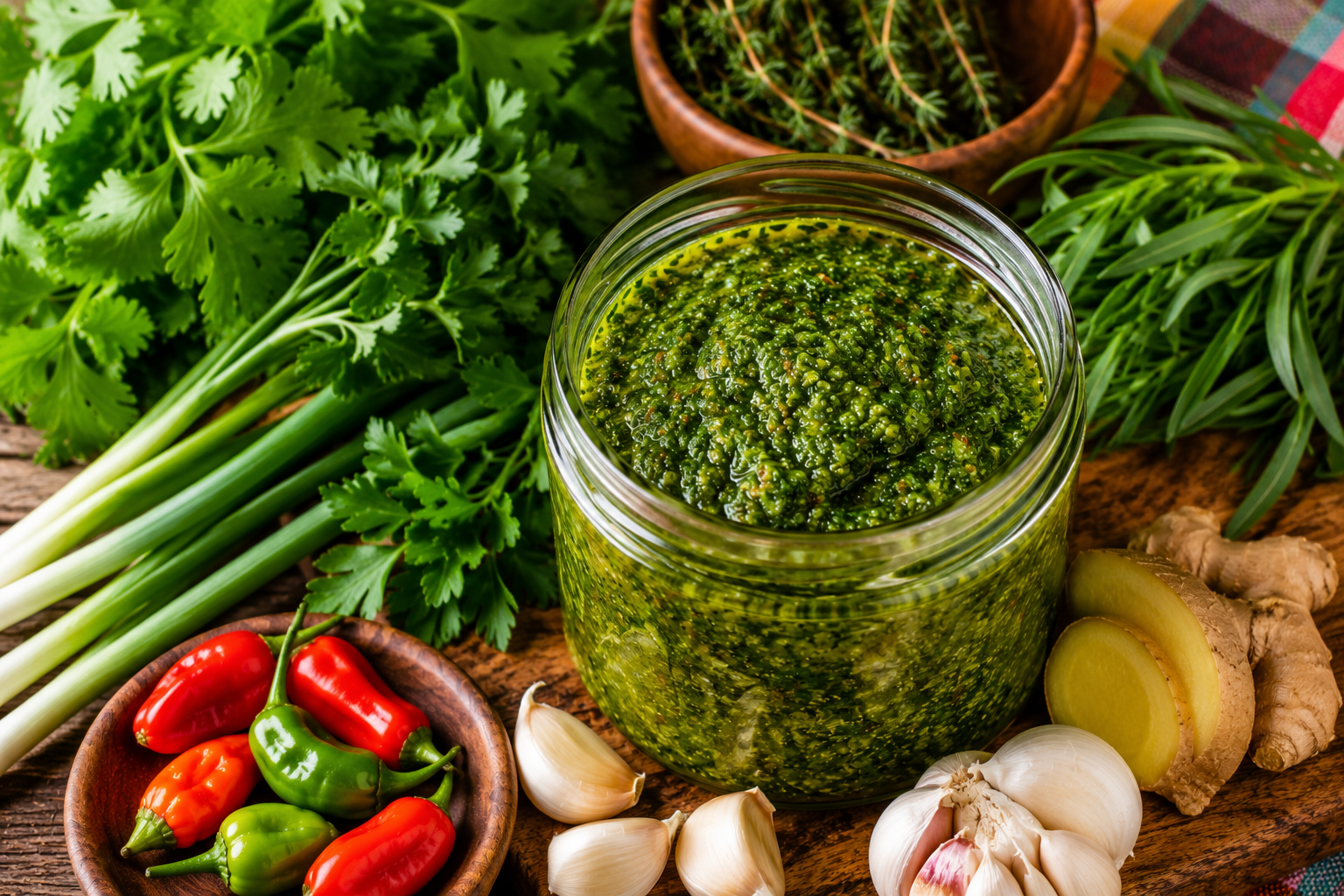
Across the Caribbean, every island has its own culinary fingerprint — but few traditions are as universal as green seasoning. In Trinidad & Tobago, this vibrant herb blend is more than a marinade. It’s a cultural foundation, a generational recipe, and the first step in building flavor for everything from stewed chicken to fish, pelau, curries, and Sunday lunch classics.
Green seasoning is the Caribbean equivalent of sofrito, mirepoix, or gremolata — but with a distinctly island identity shaped by African, Indigenous, Indian, and European influences. It’s fresh, aromatic, and deeply herbal, capturing the lushness of the islands in a single spoonful.
It’s the base of almost every savory dish — meats, seafood, rice, soups, and even some street foods.
It preserves tradition — most Caribbean households have their own version passed down through generations.
It’s economical and practical — a batch lasts weeks and instantly elevates any meal.
It represents the land — the herbs used grow abundantly in the region, especially culantro, thyme, and pimento peppers.
Green seasoning isn’t just a recipe. It’s a ritual. A memory. A flavor that instantly says “home.”
Below is a breakdown of the essential ingredients you listed — each one a pillar of authentic Trini flavor.
Culantro (known locally as chadon beni) is the soul of Trinidadian green seasoning.
Flavor: deeper, stronger, and more pungent than cilantro
Role: provides the signature herbal backbone
Cultural note: grows wild in Trinidad; nearly every backyard garden has it
Without culantro, it’s simply not Trini green seasoning.
Thyme is one of the most widely used herbs in Caribbean kitchens.
Flavor: earthy, woodsy, slightly floral
Role: adds depth and warmth
Use: fresh sprigs are preferred, but broadleaf thyme is also common in Trinidad
Thyme balances the brightness of the other herbs.
Known locally as green onions or chives, scallions bring freshness and mild onion flavor.
Flavor: clean, grassy, slightly sweet
Role: adds body and rounds out the herb blend
Cultural note: “chive” is a staple herb in Trini markets and home gardens
Scallions help soften the sharper notes of culantro and garlic.
Pimento peppers (also called seasoning peppers) are a uniquely Caribbean ingredient.
Flavor: fruity, floral, aromatic
Heat level: extremely mild — more flavor than fire
Role: adds color, aroma, and unmistakable Trini character
They’re essential for that authentic island fragrance.
Celery adds brightness and a clean, crisp undertone.
Flavor: fresh, slightly peppery
Role: adds volume and balances the stronger herbs
Cultural note: many Trini households use both stalks and leaves for maximum flavor
Celery helps create the smooth, pourable texture green seasoning is known for.
Green seasoning is incredibly versatile. Caribbean cooks use it to:
Marinate chicken, beef, lamb, and fish
Season rice dishes like pelau
Flavor soups, stews, and curries
Brighten up vegetables and ground provisions
Add depth to sauces and gravies
A spoonful can transform a dish instantly — that’s why every Caribbean fridge has a jar ready to go.
Green seasoning is more than a blend of herbs. It’s:
A symbol of Caribbean identity
A connection to ancestors and home cooking
A representation of the region’s biodiversity
A culinary language shared across islands
From Trinidad to Grenada to St. Lucia, every island has its own twist — but the heart of the tradition remains the same.
Trinidadian green seasoning is the Caribbean in a bottle — bold, green, fragrant, and alive with history. It’s the foundation of countless dishes and a reminder that the simplest ingredients, when blended with culture and memory, can create something extraordinary.